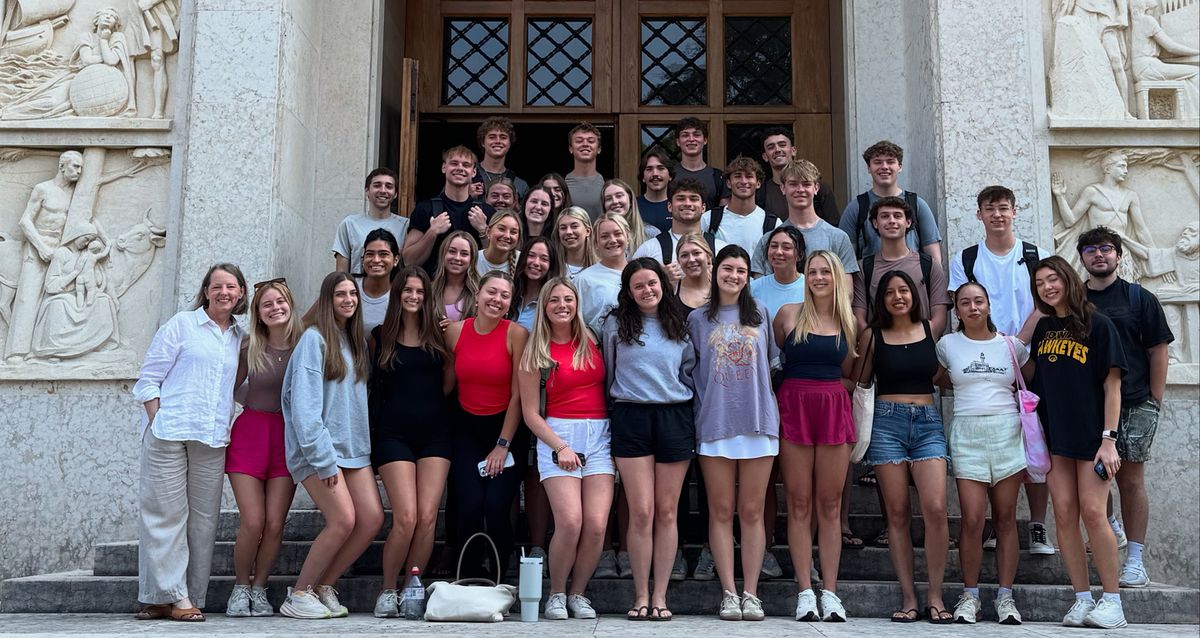
Thirty years with Arkansas
CIMBA and the University of Arkansas have worked together for three decades, making this the longest-running program taking Walton students abroad.
CIMBA’s own website is an excellent resource. This page covers what is specific to University of Arkansas students and families.
Why families trust it
CIMBA and Arkansas share a long relationship between two institutions, with Walton faculty involved at every step.
CIMBA and the University of Arkansas have worked together for three decades, making this the longest-running program taking Walton students abroad.
Arkansas professors return to Paderno del Grappa every summer, so families and students deal with people who know the program and know each other.
Walton faculty lead the information sessions, the application hackathon, the parent Q&A, and the April pre-departure session with past students, so your student is never figuring out the paperwork alone.
Your Arkansas team
Four Walton faculty teach at CIMBA each summer and are on site with students in Paderno del Grappa. Your student may take classes with them or with faculty from other CIMBA consortium universities, but the Arkansas team is there either way, and they are the people to email with any question before, during, and after the program.

Associate Professor and Director of the Walton Center for Teaching Excellence. 26+ summers at CIMBA.
mrapert@walton.uark.edu
Teaching Associate Professor. 10+ summers at CIMBA.
kpetrone@walton.uark.edu
Teaching Assistant Professor and a former CIMBA student herself. 3+ summers as faculty.
jdinger@walton.uark.edu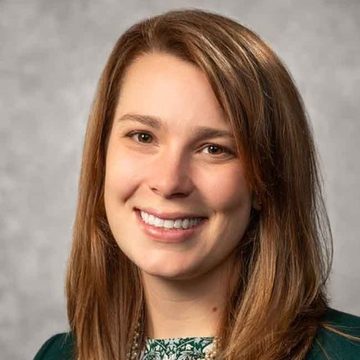
Teaching Assistant Professor. 3+ summers at CIMBA.
sgrace@walton.uark.eduSince it started in 1992, CIMBA has run in partnership with a US institution accredited by AACSB, the leading accreditor of business schools (currently the University of Iowa). Classes are taught by faculty from a consortium of US universities who are native English speakers. The one exception is the Italy Live course, which teaches Italian language and local culture and is led by long-serving instructors appointed through the University of Iowa. Michela Marin has taught it at CIMBA for more than 20 years.
Independence, with a safety net
International travel is a core part of study abroad. Navigating train and ferry schedules, subway maps, transportation strikes, language barriers, and group dynamics builds problem-solving skills students rarely face in Fayetteville. CIMBA encourages students to plan their own weekends and backs them with real support.

On-site staff and additional faculty give students independence with an institutional safety net.
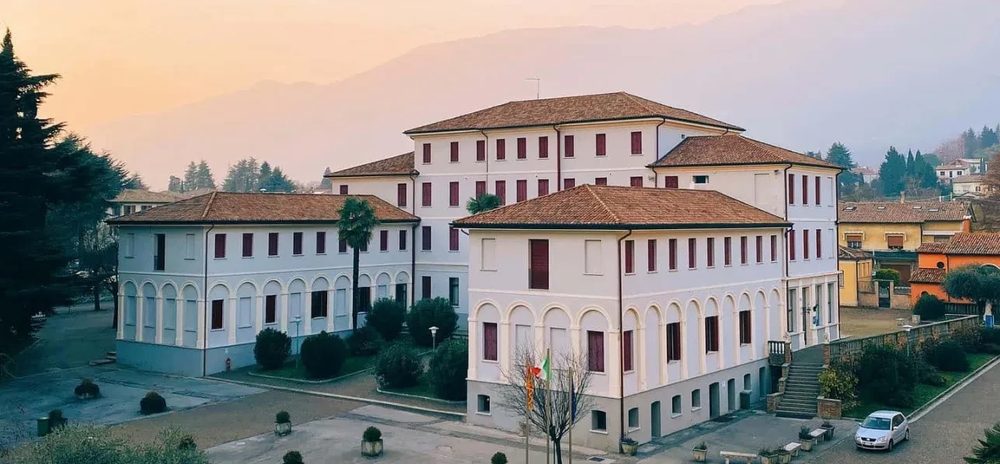
After a weekend in Rome, Florence, Paris, or Barcelona, students often tell us how relieved they are to be back in the small town of Paderno del Grappa. They settle back into a rhythm with locals, glimpse the Dolomite peaks, and recharge before a week of focused academics.
The campus has an on-site cafeteria, a gym, indoor and outdoor gathering spaces, and classrooms. Professors sometimes invite students to look out the window and watch the paragliders drift down from the sky.
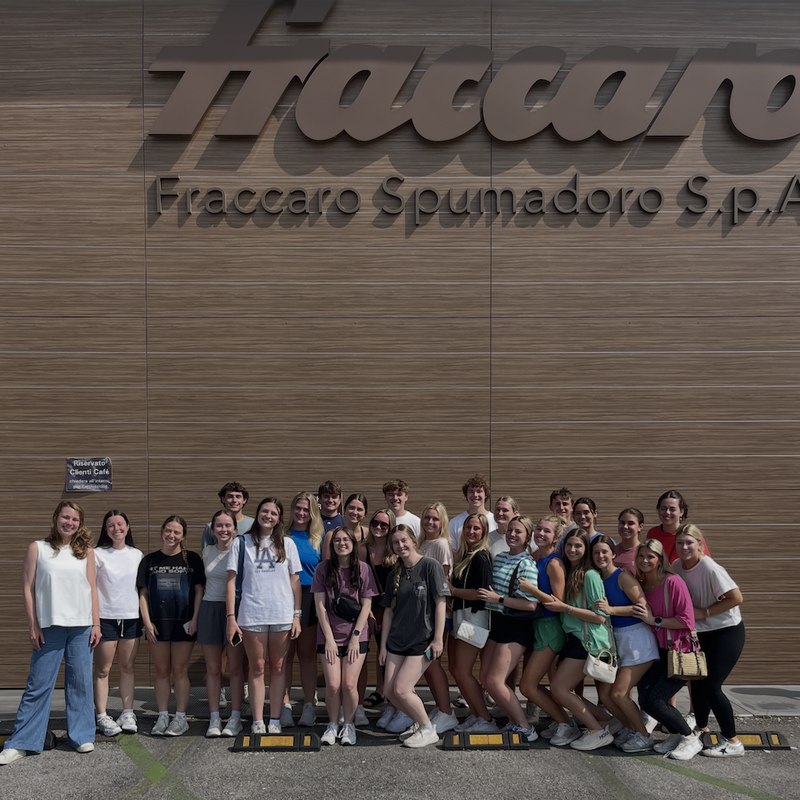
Class, but make it Italy
CIMBA sits among the headquarters and factories of hundreds of companies in apparel, housewares, motorsports safety gear, lighting, food and beverage, outdoor recreation, hospitality, and more. Each summer class meets for a three-hour afternoon session every week, which leaves room for in-depth site visits. Because CIMBA has offered an MBA for more than 30 years, many executives at nearby firms are CIMBA alumni, and they are eager to work with students.
In one recent Introduction to Marketing class, students watched a professional Adriatic cycling race speed past the dorm windows. The next week they toured the Alpinestars headquarters in nearby Asolo to see product development and safety testing. The week after, the chief marketing officer of Sidi Sport, a direct competitor, visited campus to talk about brand assets. Students left with a 360-degree view of an industry, and the same relationships feed in-class client consulting projects.
CIMBA describes its fee as all-inclusive, with no hidden costs. These are the rates CIMBA currently publishes for undergraduates.
Summer · 4 weeks
$6,998
Semester · 12 weeks
$17,655
On CIMBA’s own campus in Paderno del Grappa, a small town in northern Italy, in double-occupancy rooms. Housecleaning and laundry service are included. Students share the campus with Italian university students, so it feels like a real place rather than a tour stop. Past students say the campus feels like home within days.
Breakfast, lunch, and dinner are served in the campus cafeteria and are part of the program fee. The program also includes a gourmet Italian dinner, and students can join CIMBA-offered activities like pizza and tiramisu making.
CISI international travel and medical insurance is included in the program fee. Health and safety, travel logistics, and what to expect on the ground are covered at the mandatory pre-departure session each April, and CIMBA runs a travel-tips meeting in the first week on campus. For specifics on emergency procedures and on-site staff, email any of us or ask CIMBA directly.
Arkansas faculty are on site in Paderno del Grappa, teaching summer courses alongside CIMBA’s own on-site staff, who record weekend travel plans, pick students up when trips go wrong, and run travel orientations on arrival. Students also arrive with a group of Arkansas classmates, and past students describe CIMBA as a family.
Weekends are free time. Students travel in small groups they plan themselves, anywhere from the nearby towns of Asolo and Bassano to Venice, Florence, Paris, or Budapest, and they reconvene on campus Sunday nights to swap stories. CIMBA staff record every student’s weekend travel plans, so students are accounted for at all times, and staff have picked up delayed travelers at the train station late at night. Weekend travel is not part of the program fee, and a travel and flight seminar has been offered to help students who have never booked airfare or traveled in Europe.
Yes, when students follow the process. They choose at least four CIMBA classes and submit a DICE form so their Arkansas academic advisor approves them in advance. Our Class Finder shows how each class is expected to transfer by major, and the application guide walks through every deadline.
Real work, in a short time. Students earn 6 credit hours in four weeks, and each professor assigns about three hours of pre-course work before departure. Classes include field trips and corporate visits, so much of the learning happens outside the classroom.
Students book their own flights, and CIMBA provides bus transfers at the start and end of the program. Past students’ top packing advice: pack in layers, pack light, bring a daypack that works for class and weekend trips, and remember you will be walking a lot. Anything forgotten can be bought in Paderno or nearby Castelfranco and Bassano.
Yes. We host an online Q&A for parents and students each fall, and former CIMBA students help at the application hackathon. Once your student is enrolled, an April pre-departure session run by past students with faculty on hand covers luggage, phones, technology, travel weekends, campus, classes, food, and dorms. Follow @cimbamolly for dates.
The Arkansas group is capped, and eligible students are accepted in the order they complete both applications. In recent years the Arkansas cohort has filled by the end of the fall semester, so applying early matters. See the application guide for the current steps.
For anything about the Arkansas process, including advising, forms, and study abroad scholarships, start at hogsabroad.uark.edu, where several advisors are available. For questions about CIMBA itself, the courses, or life in Paderno del Grappa, email any of the professors above.